What makes sintered stone different
Sintering applies heat and pressure to compact mineral particles into a solid mass without fully melting them. The process is an accelerated version of what produces natural stone over geological time, and it yields a material with near zero porosity throughout rather than only at the surface.
Because the density runs through the body of the slab rather than sitting in a coating, the performance is the same at the surface and at a cut edge. It is also why sintered stone behaves differently from other engineered products, which use resin as a binder and consequently has limited heat tolerance and poor UV stability.
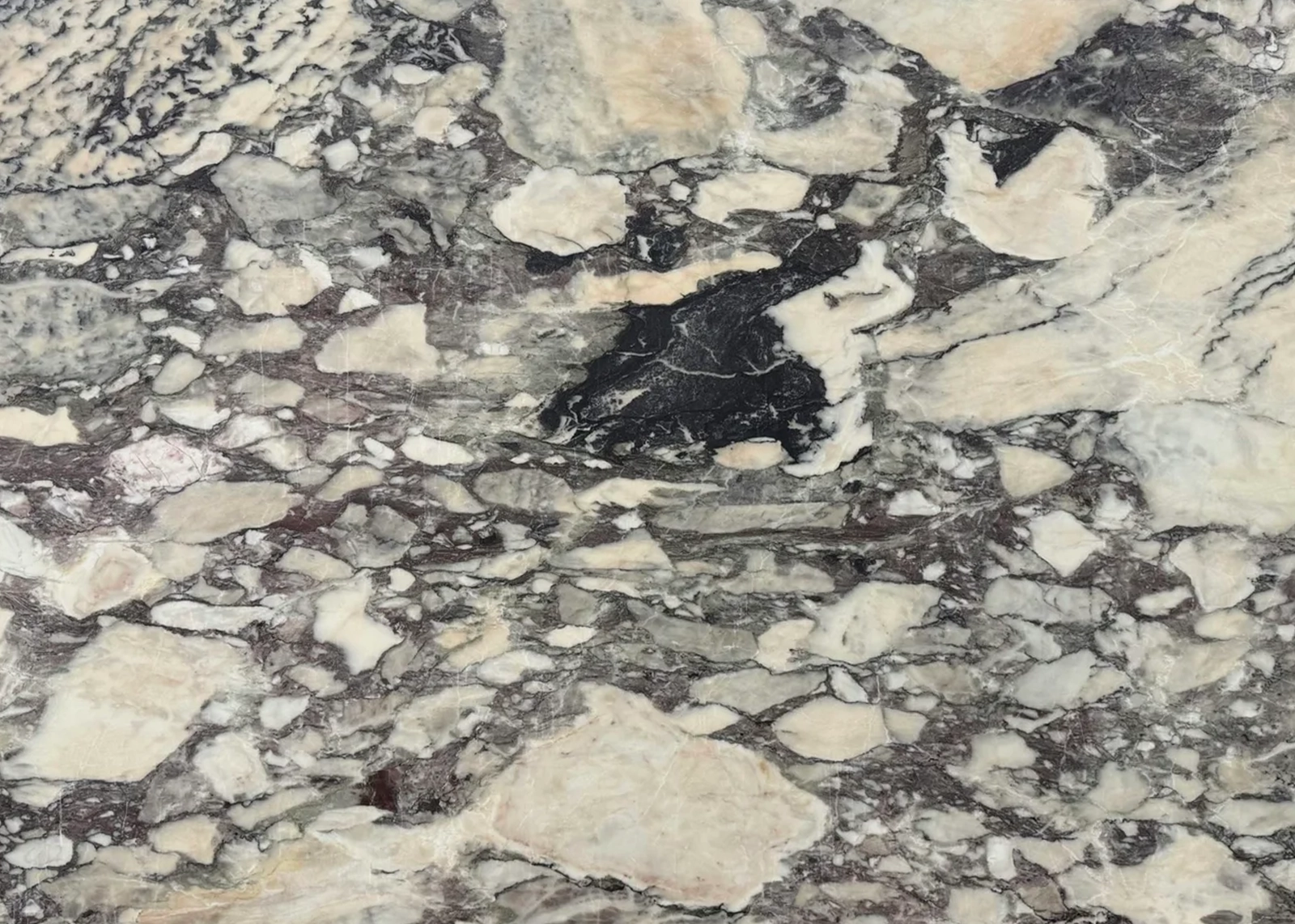
The visual range is broad, from Calacatta-inspired veining through cement and concrete looks to solid colors, with pattern repeatable between slabs.